The summer rooftop scene
Published Oct 14, 2026 · Updated Oct 16, 2026 · By June, Scene editor
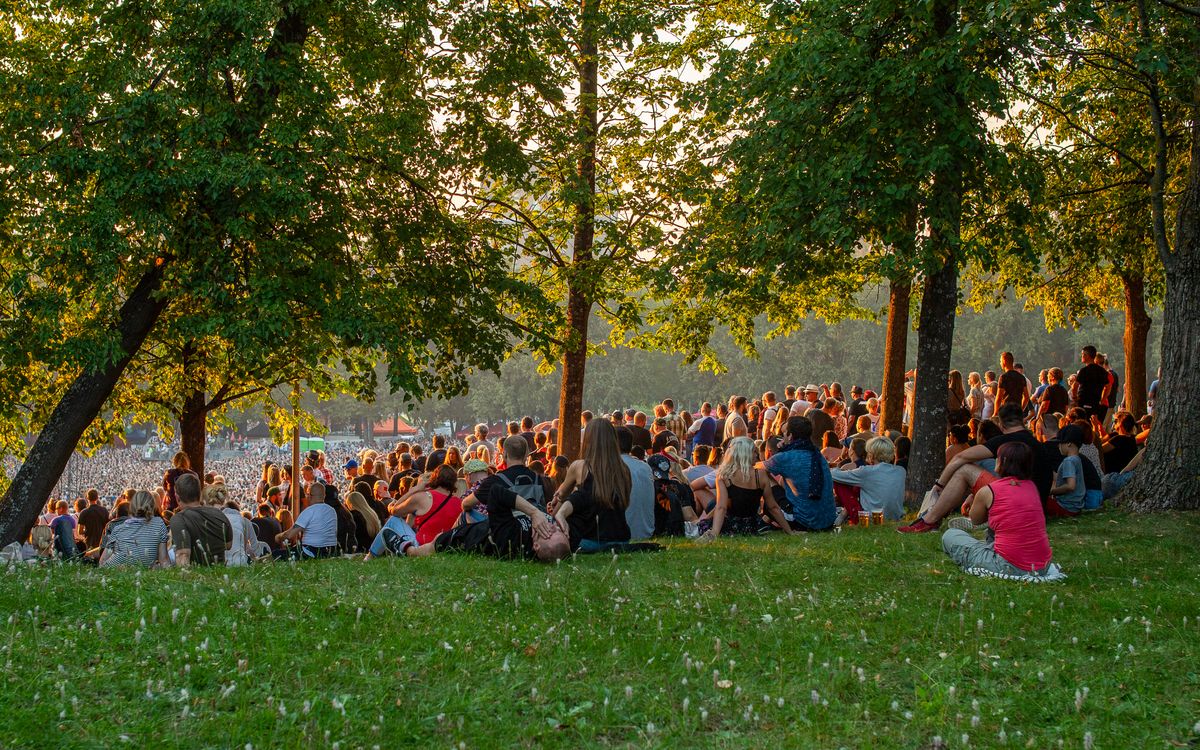
The summer rooftop scene is a six-hour outfit with a twenty-degree problem built in. It starts at four in the afternoon in an air-conditioned apartment, moves to a roof holding the day’s heat, and ends at ten under a sky that cooled while you were not paying attention. One outfit covers all three, but only if it is built as a system rather than a look.
The span: sun to dark
A summer rooftop runs in four phases: the hot afternoon, the golden hour, the sunset, and the dark. Each is a different scene with a different temperature, and the outfit that is right at five is usually wrong at nine.
The useful forecast numbers are the seven p.m. reading and the ten p.m. reading, not the afternoon high. The afternoon high happens indoors in the cold; what the outfit actually meets is the evening range and the wind that arrives with the dark.
The air-conditioning switch
The roof day is a series of switches: 68 degrees inside, 95 on the roof, 70 on the walk down. The layer has to go on over a body that is still warm from the roof and read correctly under streetlights an hour later.
The mistake is the layer that is right at nine. A piece warm enough for the ten p.m. roof is unbearable at seven, and a piece that works at seven leaves you cold at ten. One light layer beats one heavy one, and the switch is easier when the base can stand alone in the bar.
Fabric: what breathes
On a roof, the sun is direct and the surface radiates back. What matters is airflow next to the skin: linen, lightweight cotton, and open knits move air; tight weaves, poly linings, and heavy denim trap it.
Color and weight do more than people expect. A dark, close-woven fabric in the afternoon sun is a different garment from the same cut in a light, open one. On our read, the summer roof is the argument for owning one genuinely breathable base rather than three halfway options.
The one layer
Exactly one. A light overshirt, a linen shirt, or a fine knit that goes on without a mirror and looks intentional over the base. It handles the evening drop, the over-chilled bar, and the walk down — and it is small enough to carry if the night goes the other way.
The test is the same as for any scene layer: it should finish the outfit rather than hide it. If the base only works when the layer is on, the layer is doing two jobs and will fail at one of them.
Scene variants
The daytime roof — pool, sun chairs, a cooler — is swim-adjacent and casual enough that the base is the outfit and the layer is optional. Evening drinks push the formality up one notch: the layer becomes part of the look, not just a temperature tool. Dinner on the roof is the level-3 version, where the base has to survive a table and the layer becomes the finish.
The short version
The summer roof is a layering problem disguised as a warm-weather problem. Pick a base that breathes, carry exactly one layer for the dark, and dress for the ten p.m. reading — the afternoon high happens indoors, where nobody can see you.
Frequently asked questions
- What do you wear to a summer rooftop party?
- A breathable base, one light layer for after sunset, and shoes that survive both the roof and the walk down. Linen, lightweight cotton, and open knits handle the afternoon heat; the layer handles the drop that arrives with the dark. Dress for the ten p.m. reading rather than the afternoon high, because the hottest part of the day usually happens indoors.
- How do you handle going from an air-conditioned apartment to a hot roof?
- Treat the switch as the design problem. The layer has to go on over a body still warm from the roof and read correctly under streetlights an hour later, which is why one light layer beats one heavy one. If the base can also stand alone in an over-chilled bar, the evening stops being a costume change.
- What fabrics work best on a rooftop in summer?
- Airflow next to the skin decides it: linen, lightweight cotton, and open knits move air, while tight weaves, poly linings, and heavy denim trap it. The roof radiates the day's heat back at you, so weight and color matter as much as the fiber. One genuinely breathable base is worth more than three halfway options.