One-bag editing: cutting a wardrobe to what fits
Published Oct 19, 2026 · By June, Scene editor
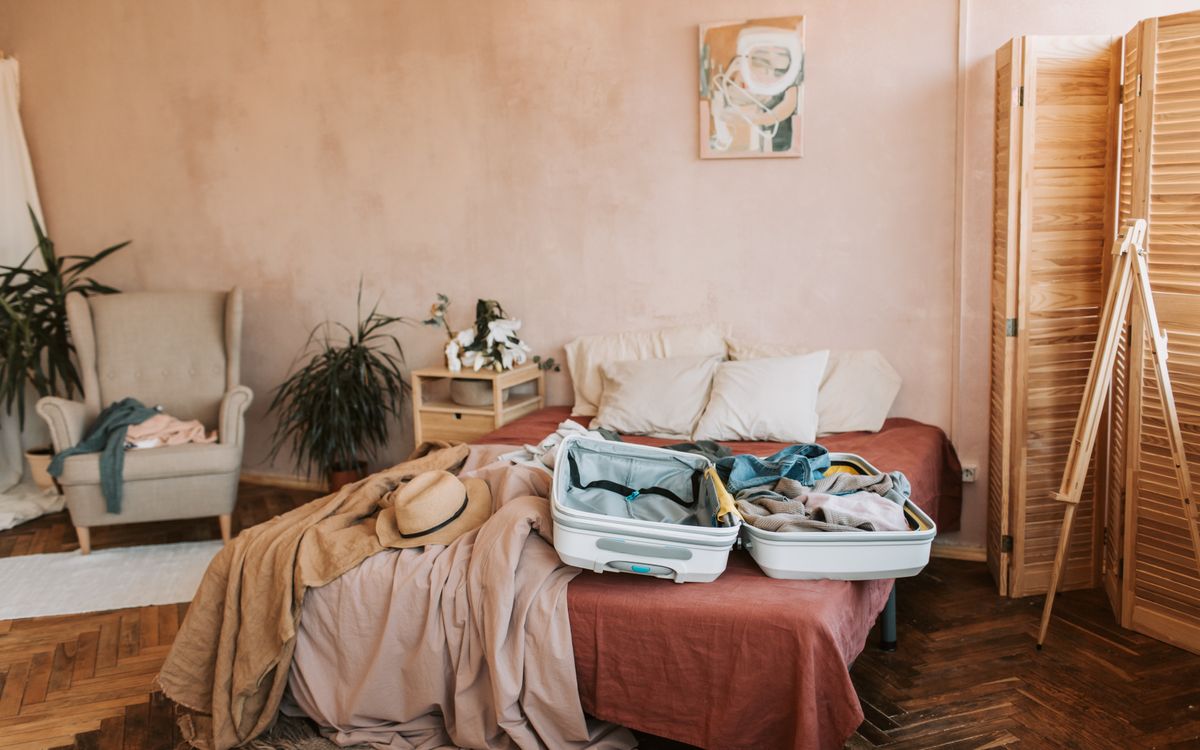
One-bag travel is usually treated as a packing problem — a smarter cube, a tighter roll. It’s an editing problem. The bag is a fixed volume, and the question is never “how do I fit more in” but “what earns the seat.” Editing has a framework: scene frequency.
The decision framework
Every item answers two questions: how often will the scene it serves actually happen, and how hard is it to improvise if you left the item home? Multiply those and you get its priority. A rain shell for a forecast week of rain is frequent and impossible to improvise — it packs. A second jacket “in case of a nice dinner” is rare and easy to improvise, because you own a shirt that reads nicer — it stays.
Pieces that feel important but aren’t fail both questions: an expensive, loved, photogenic item can still be the one that shouldn’t be in the bag. A sharper test: would I rebuy this item, today, at a travel store, for this trip? If the answer is no, you’re carrying it because you own it, not because you need it. Ownership is not a reason.
What’s hardest to cut
Three categories, in ascending order of pain.
The “almost right” item. Not quite the color, not quite the warmth, but familiar. Almost-right items are the most common reason a bag is full and an outfit is wrong. Cut it — the piece you’re mentally comparing it to is the one you actually wanted.
The backup. The spare shirt that duplicates one already packed, the second pair of socks “in case.” Backups feel like insurance and function like weight; a sink wash replaces the backup for ten minutes.
The piece with history. This one is genuinely hard, and some items travel for reasons the framework can’t see. The rule: one sentimental piece per bag, and it has to do a job — the nice jacket can be the dinner layer, the scarf the cabin layer. If it can’t do a job, it isn’t traveling; it’s on a shelf, where it belongs.
The “just in case” trap
“Just in case” is the most expensive phrase in packing, and it survives because the case never has to happen — you carry the item for a week, the scenario never arrives, and it is never caught. Make the phrase falsifiable: attach a scene and a day, “in case of rain on Thursday.” If you can name it, weigh it against the framework; if you can’t, you’re packing for anxiety, and anxiety packs everything. An item that has made two trips without leaving the bag has already been tested twice and failed.
The seasonal review
The one-bag edit is also a wardrobe audit, and once a season it should run in reverse: lay the one-bag set out from your actual wardrobe and look at what’s left over. The pile is the review — it changes with your life, and a wardrobe audited by feeling never shrinks, while one audited by the one-bag edit shrinks to the scenes that are actually happening. Do it four times a year, an hour each.
One-bag travel isn’t about suffering a smaller wardrobe; it’s about finding out which parts were doing the work. For the building blocks of a set that always fits, see the five-piece capsule; for the bag itself, see the carry-on backpack, decoded.
Frequently asked questions
- What if I genuinely can't fit everything in one bag?
- Then the answer is a second bag, honestly — but check the framework first. Most one-bag failures come down to a single mispriced item: the almost-right piece or the backup. Cut those two categories and a surprising number of trips collapse into one bag.
- How do I decide what stays when everything feels essential?
- Rank the trip's scenes by how often they'll actually happen, then cut the items that serve the rarest scenes first. Frequency beats emotional attachment in a fixed volume, and the item you're most afraid to leave is usually the one with the least scheduled use.
- Does one-bag editing work for long trips?
- It works better the longer the trip, because laundry replaces quantity. Two weeks in one bag is a laundry problem, not a wardrobe problem — the constraint is whether you're willing to spend an hour a week at a sink or a laundromat.