The transitional weather scene: dressing for a 20-degree day
Published Oct 19, 2026 · By June, Scene editor
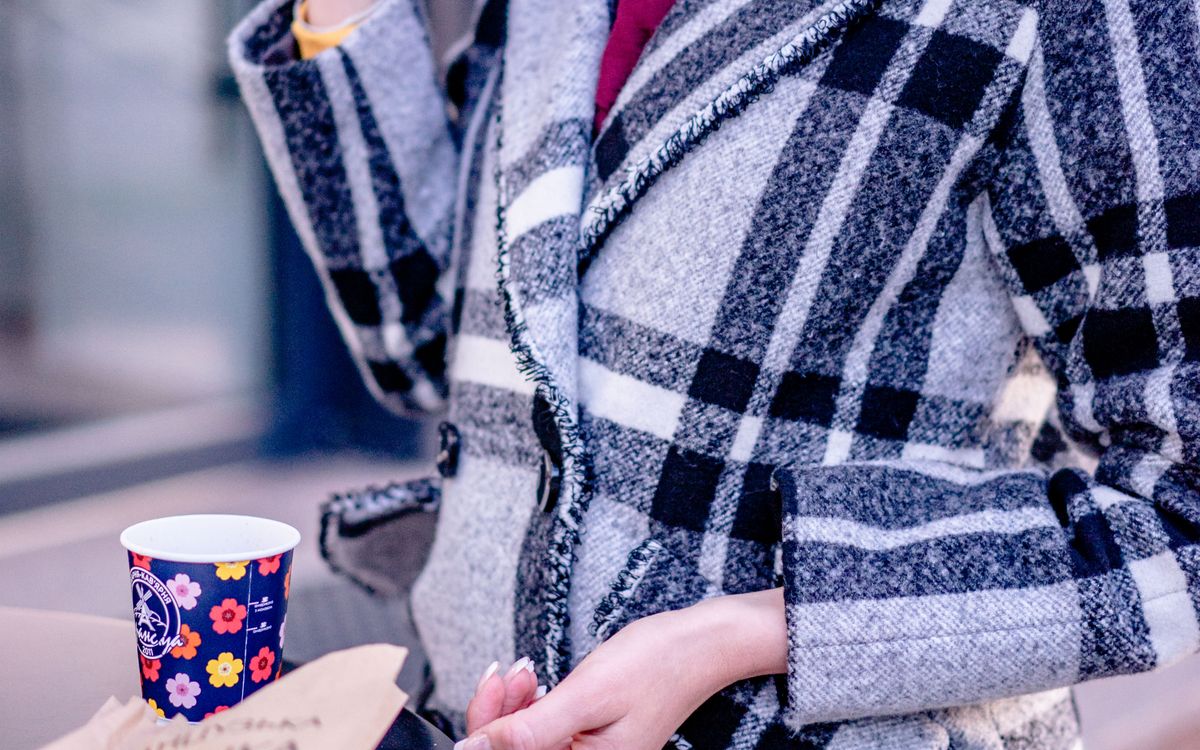
A twenty-degree day is the forecast’s least honest number. It means forty-five degrees at the bus stop and sixty-five by lunch, and the single figure on the screen describes neither. The transitional weather scene is what you wear when the day itself is the problem — and the answer is not a heavier coat. It is a system of layers, each with a job at a different hour.
Read the swing, not the number
Take the high and the low, not the average. An outfit built for the average is wrong at both ends: too hot at one, too cold at the other, and the coat you cannot take off is the coat that ruins the day.
The useful habit is reading the day as a timeline. Forty-five at seven, fifty-five at ten, sixty-five at two, fifty by six. Each of those hours is a different outfit, and the layers are what let you change without a change of clothes.
Set the formality level first
On our five-level scale, the swing day sits at level 2. Structure has to come from fit rather than fabric weight, because the layers come off and go back on all day and anything fussy stops surviving that. Dark denim, a clean knit, and a shoe with a low heel cover most swing days.
If the day ends somewhere level 3 — a dinner, a meeting — build upward from the base rather than buying a different outfit. The base is the part you never remove in public; it has to work at every formality level the day touches.
The onion principle
Three removable layers, each with a distinct job:
The base is worn from the first hour to the last and never taken off in public. It has to handle the warm end of the swing alone, which rules out anything heavy.
The mid layer is the warm layer. It goes on at the bus stop and comes off by late morning; after that it lives in the bag. The job is maximum warmth per packed inch, because the bag is its home for eight hours.
The outer layer is the one that stays. It blocks wind, adds structure, and is what you are still wearing when the mid layer is in the bag. It has to look finished over the base at two p.m. and hold wind at six.
The mistake the principle exists to prevent is the single heavy layer: right at seven, wrong at nine, and carried all afternoon.
What goes in the bag
The mid layer, stuffed into whatever pocket it stuffs into, is the point of the bag. After that, only what the day will actually ask for: a scarf for the morning, maybe gloves, and nothing else. A bag that carries the swing day’s layers is a bag that weighs what those layers weigh.
What does not go in the bag: a second coat, a spare outfit, and anything you have not needed on a previous swing day. The bag is the fourth layer, and it should be the lightest one.
Scene variants
The office swing day is the version with a cold middle: conference rooms run ten degrees under the afternoon, so the mid layer that packed away at eleven comes back out at three. The weekend version trades the bag for a car trunk and drifts more casual. The travel version is the swing day with a seat — the same three layers, one bag, no changes.
What we’d pick for this scene
If we were building the system from scratch, the three pieces we would start with:
- The base: Uniqlo Merino Crew Neck Jumper — worn all day, handles the warm end of the swing alone, and does not trap heat the way heavy cotton does.
- The mid layer: Patagonia Women’s Nano Puff Jacket — the warm layer that stuffs into its own chest pocket and rides in the bag from late morning.
- The outer layer: Levi’s Original Trucker Jacket — the wind blocker that stays, looks finished over the base, and is the layer the day can end in.
The full picks, with what each piece does in this system, are below. Prices and availability move — check the live listing before buying.
The picks
Some links below are affiliate links — we may earn a commission at no extra cost to you.
Uniqlo Merino Crew Neck Jumper
The baseA fine-gauge merino crew that handles the whole swing without ever being removed in public. Merino insulates at the cold end of the day without trapping heat at the warm end, which is exactly the behavior the base layer needs, and it washes easily between wears. Machine washable in most versions — check the label of the specific line.
- + Handles the warm end of the swing alone, so the layers above can come off
- + Insulates without bulk, so the mid layer packs small in the bag
- + Neutral colors work at level 2 and up, whatever the day ends in
- – Fine gauge shows every underneath layer — vest lines and bra straps need managing
- – Merino is softer than coarse wool but not as tough; snags are permanent
Patagonia Women's Nano Puff Jacket
The mid layerThe warm layer that lives in the bag. Patagonia's product page describes 60-g PrimaLoft Gold Insulation Eco in a recycled polyester shell — warmth for the weight, and synthetic insulation that the page says keeps warming when wet, which matters on a day that starts cold and damp. The internal zippered chest pocket stuffs the whole jacket into a self-contained pack with a clip-in loop.
- + Stuffs into its own chest pocket — the mid layer that costs the bag almost nothing
- + Synthetic insulation keeps warming when damp, unlike down
- + Windproof shell handles the six p.m. end of the swing without a separate layer
- – A heated room makes it transit-only — the warm layer comes off indoors
- – The shell fabric is light; it snags on bag zippers and straps
Levi's Original Trucker Jacket
The outer layerThe layer that stays. Levi's describes it as the original denim jacket since 1967, in a midweight denim that blocks wind without bulk, with deep inside pockets that take the morning's gloves. It is the piece you are still wearing when the mid layer is in the bag — finished over the base at two, holding wind at six.
- + Midweight denim blocks wind without the bulk of a coat
- + Reads finished over a base layer, so the mid layer can stay in the bag
- + Deep inside pockets carry the small things the day needs
- – Denim is heavy for what it does — it is the layer you wear, not the layer you carry
- – Denim dries slowly if the day turns wet — the wrong layer for a rainy swing day
Comparison
How the three picks divide the work across the swing.
| Uniqlo Merino Crew Neck Jumper | Patagonia Women's Nano Puff Jacket | Levi's Original Trucker Jacket | |
|---|---|---|---|
| Role in the system | Base — worn all day | Mid layer — lives in the bag | Outer — the layer that stays |
| When it comes off | Never, in public | By late morning; back on at six | Only indoors, if the room is warm |
| Behavior when damp | Merino keeps insulating; dries fast | Synthetic holds warmth when wet | Denim dries slowly — wrong layer for rain |
| Also works for | Studio days, travel base layer | Cold commutes, cool evenings | Market mornings, casual dinners |
Prices and availability change — the buttons above check the current listing. Last verified October 2026.
Frequently asked questions
- What does a 20-degree day mean for dressing?
- It means the day, not the number, is the problem: forty-five degrees at the bus stop and sixty-five by lunch, with a single forecast figure describing neither. Dress for the swing by layering — a base that handles the warm end alone, a mid layer that lives in the bag, and an outer layer that stays — rather than buying a heavier coat that is wrong at both ends.
- How many layers should you wear in transitional weather?
- Three removable layers is the workable number: a base worn all day, a mid layer for the cold hours that packs into the bag, and an outer layer that stays and blocks wind. Each layer comes off at a different hour, and the bag carries whichever ones are not on your body. Fewer layers means you are wrong at one end of the swing; more means you are managing clothes all day.
- What should you keep in your bag on a swing day?
- The mid layer, stuffed into its own pocket, plus a scarf for the cold end and little else. The bag is the fourth layer and should stay the lightest one — a second coat or a spare outfit defeats the system. If you have not needed it on a previous swing day, it probably does not go in.