What to wear to an outdoor concert in October
Published Oct 15, 2026 · Updated Oct 17, 2026 · By June, Scene editor
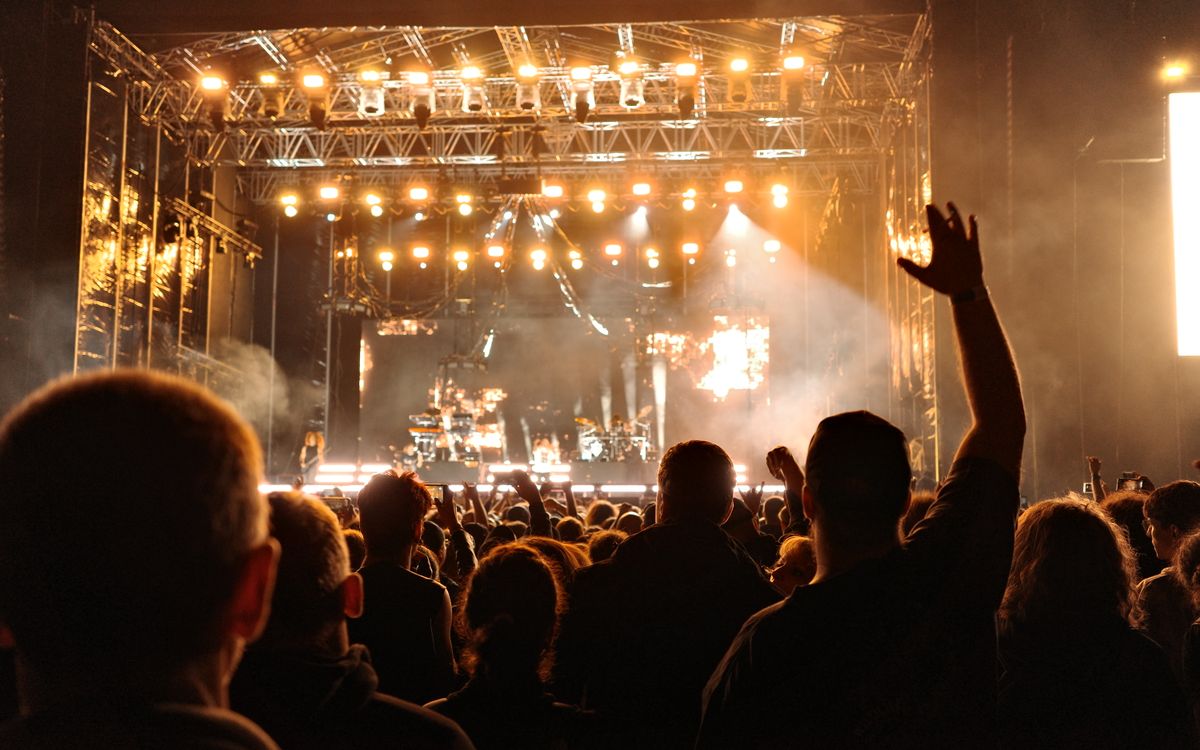
An outdoor concert is a scene built on standing: at the gate, at the barrier, at the merch table, and on the way out. The outfit has to survive three hours on your feet and a temperature cliff at sunset.
Set the scene
Time: gates in daylight, show after dark. Where: a field, an amphitheater, or a parking lot. Formality: level 1–2. The constraints: standing, crowd heat, ground conditions, and a bag policy you probably didn’t read.
The three decisions
1. Layers you can add at sunset. Start with a base that works in daylight — a tee or a light knit — and carry a mid-layer you can tie around your waist or stuff into a bag. A packable jacket is better than a heavy coat you’ll resent at the gate. The crowd itself generates heat; the walk back does not.
2. Shoes that survive the ground. Fields turn to mud; amphitheater concrete is unforgiving; parking lots are gravel. A boot or a supportive sneaker handles all three. This is not the scene for a new pair of anything.
3. Pockets over bags. Many venues limit bag size, and a bag you’re holding all night is a bag you’ll set down and forget. A jacket with zip pockets, or trousers with a secure pocket, covers phone, ID, and a card. If you must bring a bag, check the policy first and choose the smallest one that passes.
What to wear, specifically
Dark denim or cargo-ish trousers, a tee or light knit, and a jacket that can handle a light rain — denim, canvas, or a packable shell. Boots. A cap if the sun is in your eyes at the gate. One layer of warmth in reserve.
Avoid white shoes and long hems. Both fail in a crowd, and both will be dirty by the second song.
Variations
A festival with a long walk from parking: add a small backpack that meets the venue’s policy and wear the boots you’d hike in. A seated amphitheater show: you can dress one level up — a knit instead of a tee, a loafer instead of a boot. A rainy forecast: a shell with a hood beats an umbrella, which most venues won’t let in.
Working the bag policy
Bag rules vary enough that the only useful move is to read the venue’s page the day before, not at the gate. Most policies state a maximum size in inches and a style — clear plastic, a small clutch, nothing with a long strap. A foldable tote is the usual workaround: it passes as nothing, then holds a jacket once the temperature drops. If the policy is unclear, assume the strictest version and carry only what fits in a zip pocket. A bag left at the gate is a bag you spend the whole show thinking about.
The scene is about staying comfortable while standing. Dress for the ground and the last hour, and the middle takes care of itself.
Frequently asked questions
- How warm should I dress for an October outdoor show?
- Dress for the last hour, not the first. Gates often open in daylight and the show ends after dark, when the temperature drops ten to fifteen degrees. A layer you can put on at sunset is the difference between staying and leaving early.
- What shoes work for a standing concert?
- Something with a closed toe and a sole that can handle grass, mud, or concrete for three hours. Boots or a supportive sneaker are the practical answer. Avoid anything you'd have to clean, and avoid open toes in a crowd.
- Is a bag allowed at concerts?
- Often not, or only a small one under a size limit that varies by venue. Check the venue's bag policy before you leave — many now require clear bags or nothing larger than a clutch. If you need to carry a phone, ID, and a card, use pockets instead.