The flannel shirt, decoded: weight, yarn, and the collar
Published Nov 6, 2026 · Updated Nov 9, 2026 · By Iris, Pieces & materials editor
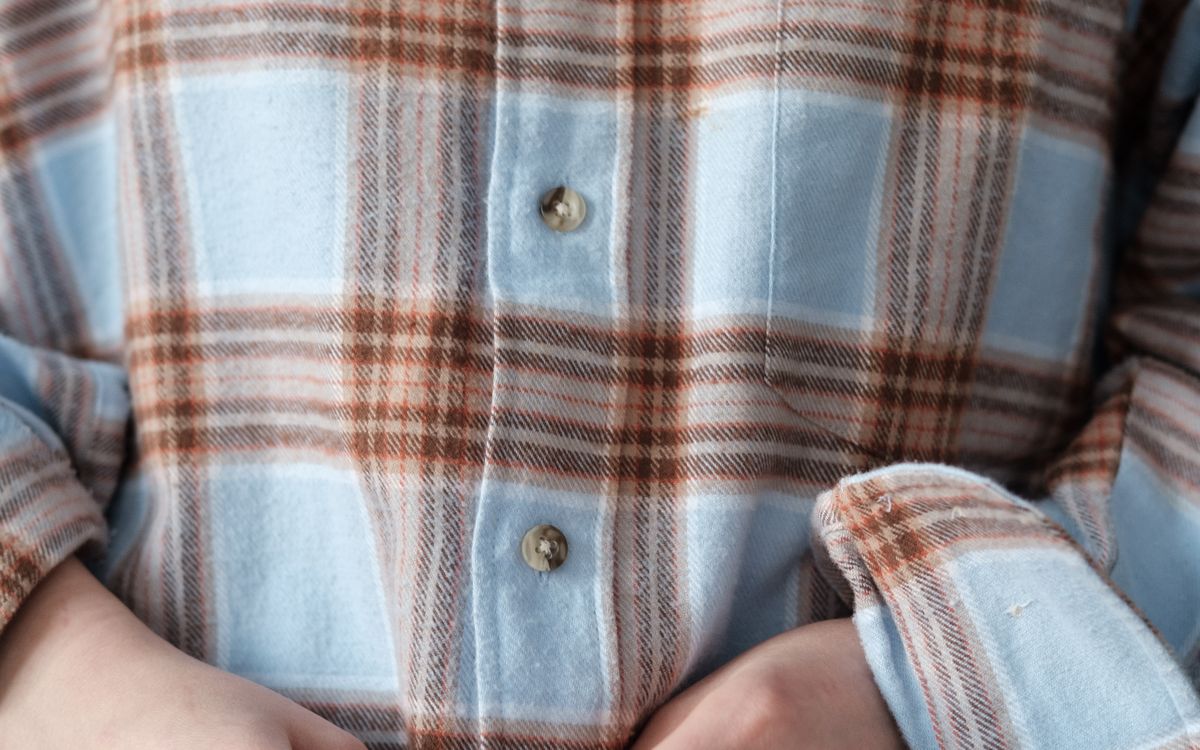
Flannel is the most misused word in the shirt department. It names a fabric — a soft, napped weave, originally wool, now mostly cotton — and has nothing to do with the check pattern people picture when they hear it. That distinction is not pedantry: once you read flannel as a cloth rather than a costume, the garment stops being one autumn cliché and becomes a layer with a measurable set of decisions. This note takes it apart.
What the fabric actually is
Flannel is defined by its finish, not its fiber. The cloth is woven loosely and then brushed — passed over rollers with fine wire teeth that raise the surface fibers into a nap. That nap is the whole point: it traps air next to the body, feels soft against skin from day one, and gives the shirt the matte, slightly hazy surface that cotton poplin never has. Run a hand across a good flannel and you can feel the direction of the nap; that is the finish, present and physical.
The fiber underneath varies. Traditional flannel was wool — the word traces to Welsh wool cloth — and wool flannel shirts still exist in workwear lines. What fills the racks today is cotton, sometimes brushed on both sides for extra loft, sometimes on one side only. A double-brushed flannel is softer and warmer out of the box; a single-brushed one keeps a crisper face and ages more gracefully. Neither label always tells you which you are holding, which is one more reason to shop with your hands.
Weight: the number that predicts the season
Cotton shirting is quoted in ounces per square yard, and flannel usually runs heavier than the poplins and oxfords around it on the rack. A lightweight flannel sits around four ounces and works as a shirt proper; a midweight lands near five to six and starts doing layer work; a heavy six-to-eight-ounce flannel is an overshirt that competes with a sweater. Our read: weight is the first thing to check, because a four-ounce flannel under a wool coat solves November, while an eight-ounce one under the same coat turns you into a mattress.
The honest way to compare is to hold the shirt up against the light. A dense, heavy flannel blocks most of it; a light one glows. That test costs nothing and predicts warmth better than any product page, because brands rarely publish the ounce weight for cotton shirting — the figure that every wool coat lists and every flannel hides.
Yarn and pattern: why some checks blur
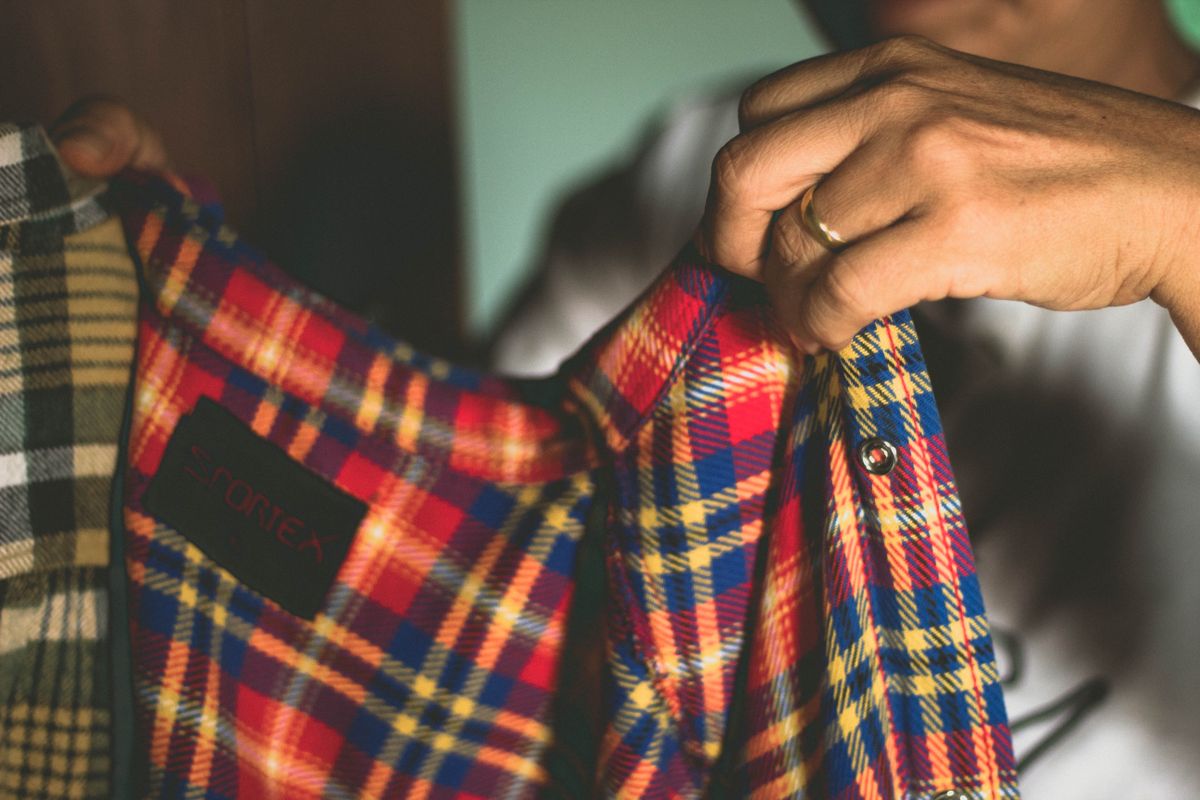
The checks that define the look are yarn-dyed — the color is in the thread before weaving, the same construction that gives good denim its depth. Cheap flannel prints or over-dyes the cloth after weaving, which is why budget checks look flat when new and fade into a blur after a season. On a good yarn-dyed flannel, the pattern is visible on the inside of the shirt with slightly softened colors; on a printed one, the inside is white or solid. Flip the placket and you have the answer in ten seconds.
Pattern scale is a style decision with a fit consequence. A large check reads louder and adds visual width; a small, tight check reads as texture from across the room. Alignments matter too — a shirt where the plaid matches across the front placket and pocket costs more to cut, which is why it signals care. Alignment across every seam is expensive to the point of rarity; expect it matched at the placket and the pocket, forgive the side seams.
The collar and the buttons
Two collar types dominate. The button-down collar — soft points held by buttons, borrowed from polo shirts — survives being worn open-collared under a knit and looks deliberate with nothing over it. A plain point collar lies flatter and dresses the shirt up a notch, but flaps around when worn open. Since most flannels live their lives unbuttoned at the neck over a tee, the button-down collar is the practical default.
Buttons follow the same logic of small details meaning something. Corozo or thick plastic buttons feel substantial and survive the dryer’s raids; thin, rattly buttons are the cheapest part of a cheap shirt. The chest pocket sits lower on overshirt-weight flannels, which matters if you carry glasses — and the cuffs, on a proper flannel, have two buttons rather than one, because thick wrists and rolled sleeves both need the range.
Care: the nap is the asset
Everything that makes flannel pleasant — the nap, the loft, the relaxed weave — is what heat destroys. Machine drying drives the fibers flat and shrinks the cotton; the result is a shirt that fits like it did two sizes ago and feels like paper. Wash cold, hang dry, and the nap survives years. The full sequence, including what to do when it stiffens anyway, lives in the garment care basics.
Wear patterns matter as much as washing. Flannel is a friction cloth — backpack straps and seatbelts rub the nap off the shoulder in patches that never recover. If you commute by bike or carry daily, either rotate between two shirts or accept that the right shoulder will go smooth by spring. Nobody plans for this; everyone notices it in photos a year later.
How to buy one
Decide the job first, because the job decides the size. Under a sweater or coat, it must fit like a proper shirt — close at the chest, sleeves ending at the wrist bone. Over a tee as an overshirt, buy the size that lets a layer disappear underneath, which usually means one up. Trying to do both jobs with one shirt is how the middle ground gets bought and never worn.
Then run the three checks in order: hold the cloth to the light for density, flip the placket for yarn-dye, pinch the buttons for hardware. A shirt that passes all three at any price is a good shirt; one that fails the yarn-dye test will look old within a season no matter what it cost. The checks take two minutes and they work on every brand from the workwear rack to the designer floor — which is exactly what a fabric, read as a fabric, should give you.
Frequently asked questions
- Is flannel a pattern or a fabric?
- A fabric. Flannel is a soft, napped cloth — historically wool, today usually cotton — and the check pattern that often comes with it is a yarn-dyed weave, not the definition. A plain navy flannel shirt and a red plaid poplin shirt are both entirely possible.
- Will a flannel shirt shrink in the wash?
- Cotton flannel shrinks, most on the first wash, because the cloth is relaxed and brushed. Wash cold and hang dry to keep shrinkage minor; a machine dryer will pull a half size out of a new shirt faster than anything else you can do to it.
- Should a flannel shirt fit like a shirt or a jacket?
- Depends on the job. Worn as a shirt under a sweater or coat, it should fit close enough to disappear underneath. Worn as an overshirt over a tee, it needs one size of room at the chest and sleeve — decide which job it does before you buy, not after.