Suede and nubuck: how they age, and how to keep them
Published Oct 12, 2026 · Updated Oct 14, 2026 · By Iris, Pieces & materials editor
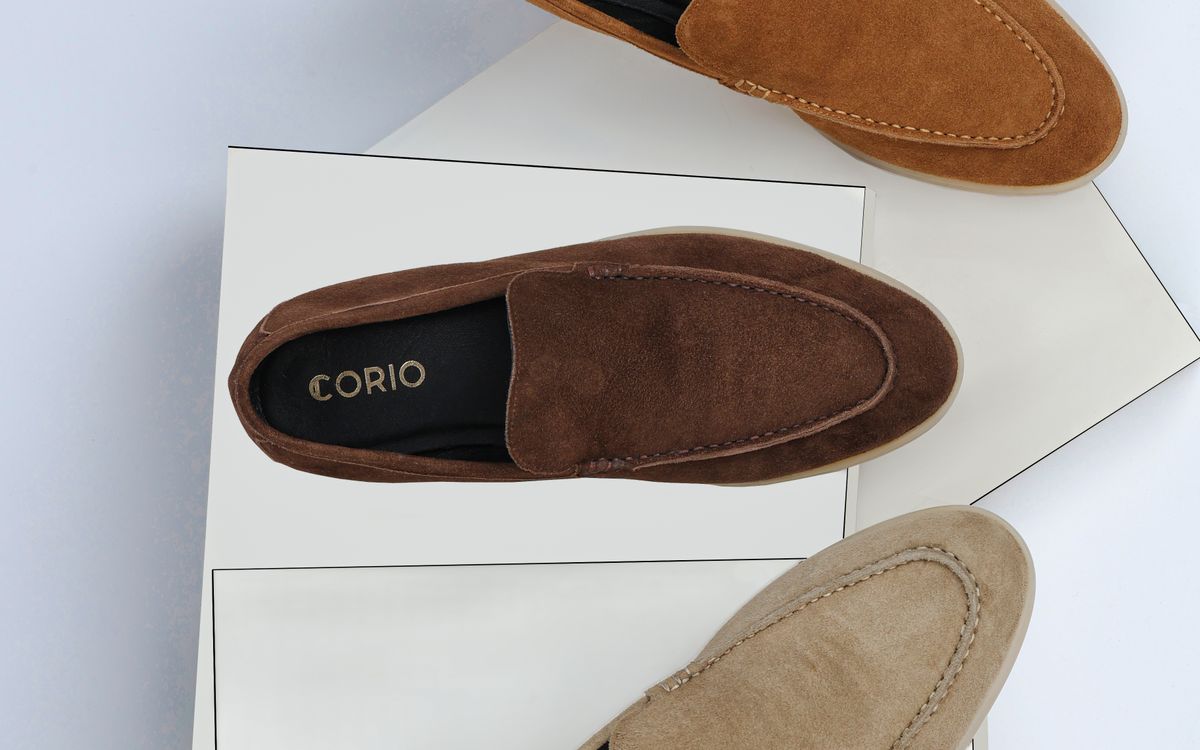
Suede is the most honest material in a wardrobe. It shows every scuff, every salt line, every dry spell — and in exchange it develops a depth of color that finished leather never reaches. The trade is maintenance, and the maintenance is simpler than its reputation.
Suede and nubuck, actually
Both are leather with the surface napped into a soft nap; the difference is where in the hide that nap comes from. Suede is cut from the underside of the split — the inner layer, sanded up into a deep, plush nap. Nubuck is sanded from the outer, top-grain side, which leaves a finer, denser nap.
The practical difference is durability. Nubuck’s finer nap holds up better to abrasion and soil, which is why boots and rugged shoes so often use it; suede’s deeper nap is softer and drapes better, and pays for that in fragility. Neither has the tight finished grain that sheds water, so both mark faster than plain leather — that’s physics, not bad luck.
How suede ages
The nap is made of tiny fiber ends standing upright. Wear lies them down. Where a shoe flexes, where a heel strikes, where a thumb pulls a loafer on — the nap flattens and darkens, and the color deepens from friction and the skin’s own oils. This is patina, and on suede it arrives faster and reads deeper than on finished leather.
Two kinds of marks behave differently. Dry scuffs and shine usually blend back into the surrounding nap with brushing alone. Water lines and salt stains dry into the fiber and need a damp pass with cleaner. Oil and grease are the hard case — they wick into the nap and rarely lift completely.
The waterproofing reality
Suede sprays work, within limits. They coat the nap with a barrier that makes water bead instead of soak, and that buys time in a drizzle. What they do not do is make suede waterproof: the barrier sits on the very surface friction removes, so it has to be renewed — typically every season, or after several wet wears. New suede should be sprayed before its first wet wear; winter cities add salt, which dries as a white line and needs brushing out before it degrades the fiber.
Treat the spray as a filter, not a force field.
The routine
The care instructions that ship with serious suede goods read almost the same everywhere. Filson’s, for one, describe a suede brush for surface dirt, a gum eraser for scuff marks, a suede brush dampened with a little water and suede cleaner for stains, a clean towel to dab off excess moisture, then air drying — followed by a fresh coat of water and stain repellent once dry.
Three habits carry most of the load:
- Brush after wear, in both directions, to lift the nap back up
- Dry wet suede slowly, away from direct heat, with paper stuffed in to hold the shape
- Reapply protector on a schedule, not after the first soak
A crepe eraser, a suede brush, and a small bottle of cleaner are the entire kit. Everything beyond surface work (set oil, collapsed nap, a lining rebuild) belongs to a cobbler.
What we’d pick
For the suede-curious, three shoes cover the range:
- Clarks Wallabee — the reference suede shoe: a soft suede upper on a pebble crepe sole, built to show what a decade of patina looks like
- Everlane The Boat Shoe — Italian suede with a rubber outsole, the lighter weekend end of the range
- Carhartt Detroit Lined Slip On — suede used as a work material, sherpa-lined and rated for slippery floors
Same material, three lives. The picks below break down what each does, and what it asks of you.
Prices and availability move — check the live listing before buying.
The picks
Some links below are affiliate links — we may earn a commission at no extra cost to you.
Clarks Wallabee
The classicThe reference point for what a suede shoe becomes with age: a soft suede upper on a part-recycled natural rubber pebble crepe sole, in moccasin construction that has been in the line since the late 1960s. Crepe grips wet pavement better than most leather soles, and the nap deepens in color at the wear points instead of scuffing away. Leather-lined, and sized in whole and half sizes up through 13.
- + Pebble crepe sole grips wet and gritty ground
- + Suede ages into visible patina rather than looking worn out
- + Leather lining; broad size and width range
- – Needs protector before the first wet wear, and reapplication after
- – Crepe wears faster than rubber under daily pavement use
Everlane The Boat Shoe
The weekend pairA loafer-silhouette boat shoe in Italian suede on a recycled rubber outsole, with a nappa leather lining and an 8mm heel — the lighter, warmer-weather end of the suede range. Everlane sources the leather through an LWG Gold- or Silver-rated tannery and lists the fit as true to size, not running narrow. One caveat from the brand's own care note: professional leather clean only, so this is not a home-wash shoe.
- + Italian suede upper on a low-profile rubber sole
- + Listed true to size and not narrow
- + Leather from an LWG-rated tannery, per the brand
- – Brand directs professional leather clean only
- – Suede colorways sell through unevenly across the season
Carhartt Detroit Lined Slip On
The work option $94.99Suede treated as a work material: a durable suede upper with abrasion-resistant coated leather at the contact points, sherpa fleece and FastDry linings, and a full-ground-contact slip-resistant rubber outsole that meets the ASTM F3445-24 SR standard. Electrical-hazard rated, with an APMA-accepted footbed. This is the pick for cold, wet, slushy days where a fashion suede shoe would be destroyed by noon.
- + Suede upper reinforced with coated leather where abrasion hits
- + Slip-resistant SR-rated outsole; EH rated
- + Wide toe box; cushioned, podiatrist-endorsed footbed
- – Sherpa lining makes it a cold-weather shoe only
- – Workwear styling reads more jobsite than city
Comparison
Three suede shoes at three ends of the same material's range.
| Clarks Wallabee | Everlane The Boat Shoe | Carhartt Detroit Lined Slip On | |
|---|---|---|---|
| Upper | Suede | Italian suede | Suede with coated leather panels |
| Lining | Leather | Nappa leather | Sherpa fleece with FastDry |
| Sole | Pebble crepe rubber | Recycled rubber | Slip-resistant rubber, SR-rated |
| Best for | Everyday city wear | Weekends and mild weather | Cold, wet work days |
| Home care | Brush, eraser, protector spray | Professional leather clean only | Brush, eraser, protector spray |
Prices and availability change — the buttons above check the current listing. Last verified October 2026.
Frequently asked questions
- Is suede actually leather?
- Yes. Suede is leather whose surface has been napped — sanded to raise a soft nap — instead of left as a tight finished grain. That nap is what makes suede soft to the touch and quick to show every mark.
- Can suede be machine washed?
- No. Agitation and water felt and mat the nap, and heat from a dryer sets the damage. Spot-clean with a suede brush and a small amount of suede cleaner, dab with a clean towel, and air dry away from heat. For anything beyond surface dirt, a professional leather clean is the safe move.
- Does waterproof spray make suede waterproof?
- No. Read the label — most products claim water resistance, not waterproofing, and the barrier sits on the nap where friction wears it off. Spray new suede before the first wet wear and reapply every season or after several wet wears.