Merino, lambswool, cashmere: what the labels actually promise
Published Oct 8, 2026 · By Iris, Pieces & materials editor
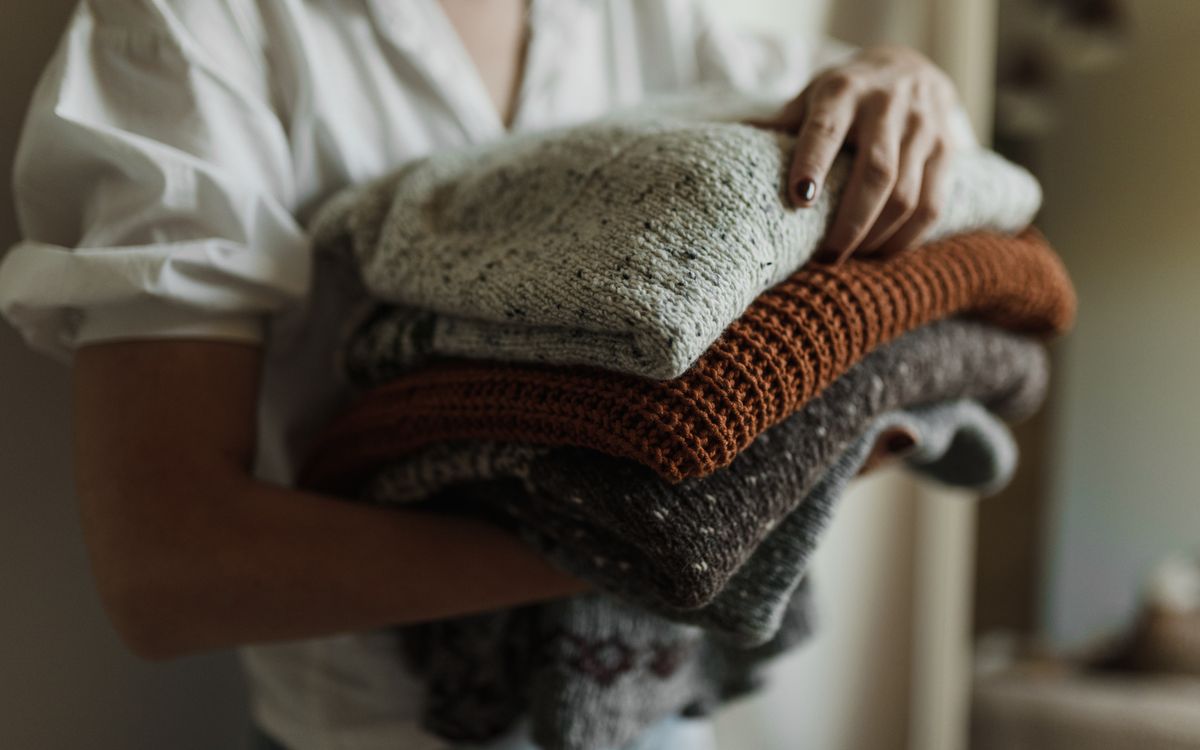
Autumn knitwear labels are a vocabulary test — merino, lambswool, cashmere, each implying a different price and a different care routine. This note decodes the three you’ll meet most.
Merino: the workhorse
Merino is a breed of sheep, and the word on a label means the wool came from merino sheep — which produce finer fibers than most other breeds. Finer fibers bend against skin instead of pushing into it, which is why merino usually doesn’t prickle the way coarser wool does.
What the label usually means: fine wool, soft enough for next-to-skin wear, often machine washable (check the specific line — not all merino is treated the same), and warm for its weight. Merino also manages moisture better than cotton, moving vapor away from skin rather than soaking it up.
Where the label overpromises: “merino” doesn’t specify a micron count. A coarse 23-micron merino and a fine 17-micron merino both carry the word, and they do not feel the same. If softness matters, look for the micron count or a “next-to-skin” designation, not the breed name alone.
Lambswool: the first shear
Lambswool is the first shearing from a young sheep — softer than wool from the same animal later in life, and the term you’ll see on classic British knitwear. It is not a breed: a lambswool sweater can be any breed’s first shear, and the word says nothing about fiber diameter on its own.
In practice, lambswool knits tend to be springier and more compact than standard wool, with a surface that shows pattern well. They’re usually not marketed as next-to-skin (that’s merino’s territory) and they’re often blended for durability.
Cashmere: the undercoat
Cashmere is the fine undercoat of cashmere goats, combed — not sheared — in spring. It is the finest and warmest-per-gram of the three, and the most expensive by far, because one goat yields only ounces a year.
What the label usually means: exceptional softness, light weight, and warmth without bulk. Cashmere also drapes differently from wool — it hangs rather than springs. Where the money leaks:
- “Cashmere blend” means anything from 10% to 90% cashmere. The percentage is on the label — read it. A 30% blend is mostly not-cashmere.
- Grade letters (A, B, C) are not standardized across the industry. A Grade A from one seller isn’t comparable to another’s.
- Pilling is not a defect — it’s short fibers migrating to the surface, and it happens to all cashmere. De-pilling tools exist; prevention is gentle washing and drying flat.
The behavior table
| Fiber | Warmth for weight | Next-to-skin? | Care routine |
|---|---|---|---|
| Merino | High | Usually yes | Often machine washable, gentle cycle, dry flat |
| Lambswool | Medium-high | Sometimes | Hand wash cool, dry flat |
| Cashmere | Highest | Yes | Hand wash cool or gentle machine cycle, dry flat away from heat |
Warmth-for-weight varies by knit structure and finish, so treat the table as direction, not measurement.
Blends, and what to buy
Blends are not automatically a downgrade. A wool-nylon blend resists abrasion in a way pure wool doesn’t, which is why socks and kids’ knits use them. A cashmere-wool blend costs less and pills less while keeping most of the hand. Read the percentage list in order from highest to lowest — it tells you which fiber is doing which job.
For a first good autumn knit, merino is the safest purchase: soft enough for next-to-skin, usually machine washable, and priced like a normal garment. Cashmere is worth it for pieces worn against bare skin often (a crewneck, a scarf) and worth skipping for anything that lives under a coat. Lambswool is the heritage choice: compact, patterned, made to be worn over something else.
Read the percentage list before the marketing word, and the care label before both.
Frequently asked questions
- Is merino always itch-free?
- No — itchiness depends on fiber diameter and on your skin's sensitivity. Merino is finer than standard wool, which is why it usually doesn't prickle, but coarse microns within a batch can still irritate. If a fine knit itches, it's usually the blend or the finish, not the merino itself.
- Can cashmere be machine washed?
- Some modern cashmere is labeled machine washable on a gentle cycle, and it's usually true — but hand washing in cool water with a wool-specific detergent is still the lower-risk routine. What damages cashmere most is heat: hot water, tumble drying, and radiators.
- Why does my wool sweater smell after one wear?
- Wool holds odor less than synthetics, but it holds it more than linen. The usual cause is washing too seldom rather than too often — wool needs fewer washes than cotton, but not zero. Air it between wears, wash when it needs it, and dry it fully before it goes back in the drawer.