Dress fabrics, in plain language
Published Oct 14, 2026 · Updated Oct 16, 2026 · By Iris, Pieces & materials editor
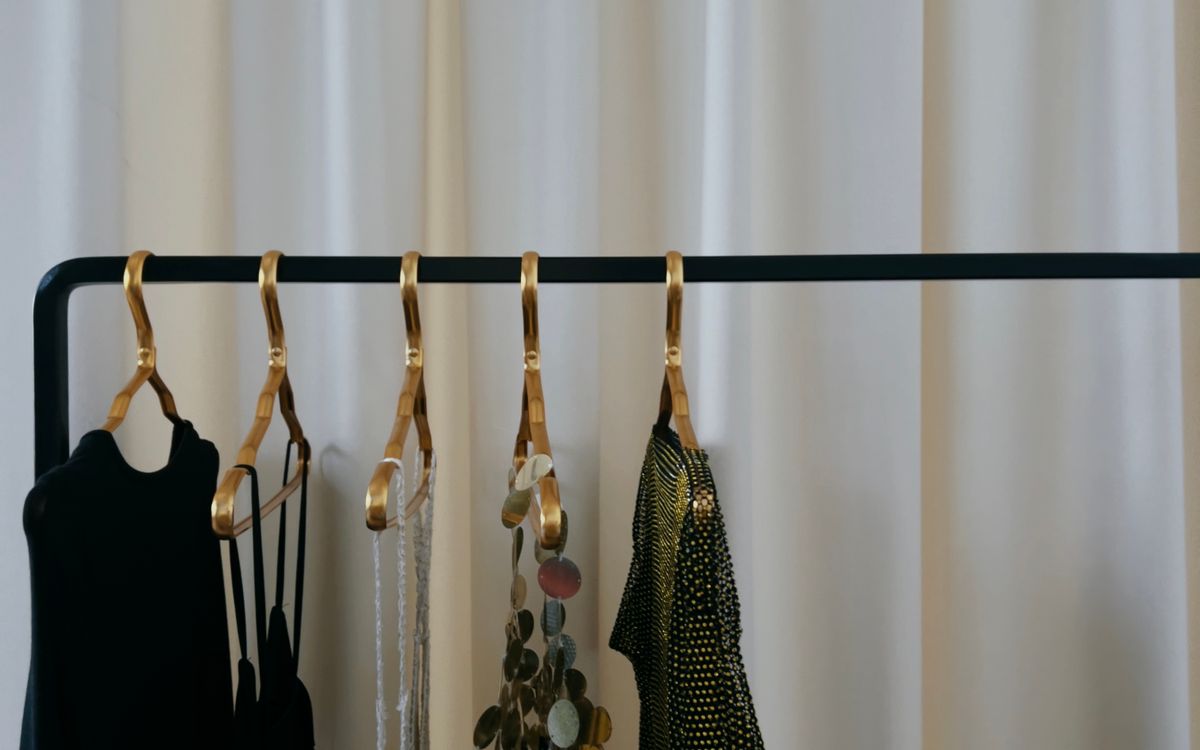
Four fabrics account for most dresses sold: crepe, jersey, silk, and linen. They differ less in what they are than in how they hang, and how a fabric hangs decides which scenes the dress belongs to. Here is the short version of each.
The four, decoded
Crepe is a textured weave — the yarn is twisted before weaving, which gives the fabric a matte, grainy surface. That texture does the work: crepe holds shape without stiffness, drapes in clean folds, and hides every bump underneath it. Most crepe today is polyester or rayon, not silk, and it is the most forgiving of the four.
Jersey is a knit, not a woven, which means it stretches. It moves with the body, draps close, and skims rather than structures — comfortable, quietly easy, and hard to tailor into sharp architectural lines. Viscose and modal jerseys drape more fluidly than polyester blends; all of them stretch out at the shoulders if hung wet.
Silk is the range of the four. Crisp weaves like taffeta and dupioni hold a sculpted shape; fluid weaves like charmeuse pour. What all silks share is sensitivity: heat, water spots, and perspiration all mark it, and deodorant can degrade the fiber where it lands. Silk also shows the lining and the slip beneath it more honestly than any other fabric.
Linen is woven from flax and breathes better than anything else here. The trade is creases — the fiber has little elasticity, so folds stay exactly where they’re bent, and the wrinkles are structural, not a care failure. Linen reads relaxed and resort-casual in almost any cut.
Drape and the scene
Structured fabrics go to structured rooms. A crisp crepe or a dupioni silk holds a line at a business dinner and photographs with clean edges; a fluid jersey or charmeuse belongs to the evening and weekend end of the calendar, where movement reads as the point. Linen is the warm-weather daytime answer and almost never the evening one — the creases read as ease at noon and as neglect at eight.
The practical test is simpler than the rules: hold the dress up and let it fall. Fabric that swings into wide soft folds is built for movement; fabric that hangs in a straight column is built to hold a shape.
What lining changes
A lining turns a dress into a garment with architecture. It adds opacity, keeps the silhouette from clinging, reduces static, and lets lined dresses glide over slips and tights without catching. Unlined dresses are lighter and cooler, and they behave more like the fabric alone — which for a fluid silk or a heavy linen is usually better than fighting it with lining.
Lining quality varies more than shell quality. A cheap synthetic lining can make a lined dress feel hotter and clingier than the unlined version of the same dress, so it’s worth turning a dress inside out before buying.
Care, per fabric
| Fabric | Washing | Drying | Watch for |
|---|---|---|---|
| Crepe | Machine gentle or hand, cool | Hang or dry flat | Blend content on the label |
| Jersey | Machine gentle, cool | Always flat | Shoulder stretch from wet hangers |
| Silk | Hand cool, or per label | Flat, out of the sun | Heat, water spots, deodorant |
| Linen | Machine cool | Tumble low or hang | Creasing is structural, not damage |
Wash everything cool, and dry knits flat — those two habits prevent most dress casualties.
Frequently asked questions
- Does crepe wrinkle?
- Less than a smooth weave does — the crinkled, textured surface hides creases instead of showing them, which is why crepe is a work-dress staple. It is not wrinkle-proof, though; a packed crepe dress still needs a hang and a steam.
- Is jersey too casual for an office?
- It depends on the weight and the drape. A heavier viscose jersey in a dark color, in a structured cut, reads perfectly office-appropriate. A fine, fluid jersey in a pale color reads weekend. The knit is the tell, not the formality of the cut.
- How should silk be washed?
- Check the label first — many silk dresses are dry clean only. If the label allows it, hand wash cool with a mild detergent, never wring or twist, and dry flat away from direct sun. Heat sets stains and dulls the sheen, and deodorant marks can degrade the fiber over time.