The belt, decoded: width, leather, and the buckle
Published Oct 12, 2026 · Updated Oct 14, 2026 · By Iris, Pieces & materials editor
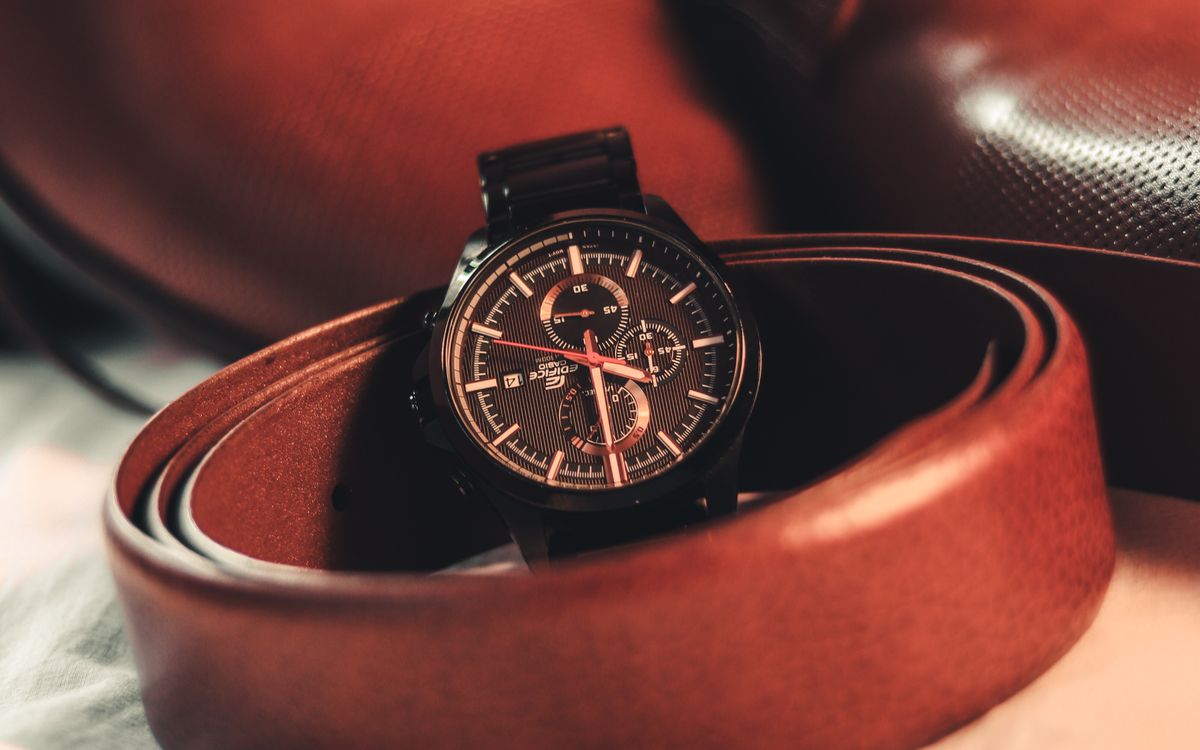
A belt is the only accessory with a structural job. It closes the loop between trousers and shirt, and it does it in public, at waist level, where everyone can see whether the register is right. The mistake isn’t wearing a belt — it’s wearing one that signals the wrong formality level, or one made of leather that won’t survive the fold.
Width sets the register first
Width is the first thing to read, because it maps to formality more reliably than color does. The evening-and-trousers range is 1.25 to 1.5 inches; within that, narrower reads dressier. Denim, chinos, and workwear take 1.5 inches without complaint. Past 1.5 inches you’re into utility webbing, which is a different category that has nothing to do with tailored trousers.
For reference, 1.25 inches is about 32 mm and 1.5 inches is about 38 mm, since belt widths are quoted in inches even on metric-first brands. The practical test: a belt too wide for the trousers fights the belt loops; one too narrow reads as an afterthought.
| Belt width | Reads at | Best with |
|---|---|---|
| 1.25 in (≈32 mm) | Level 3-4 | Tailored trousers, chinos |
| 1.5 in (≈38 mm) | Level 2-3 | Denim, workwear, weekend trousers |
| Webbing, 1.5 in + | Level 1-2 | Outdoor and casual scenes |
Leather grade: full-grain vs bonded
The leather decision is about what happens at the fold. Full-grain leather keeps the hide’s top layer, the part with the tightest fiber, so it creases, darkens, and develops a patina over years. Bonded leather is scrap leather ground up and glued into a sheet with a printed surface; it looks convincing new and tends to crack or peel at the fold within a couple of years.
Between them sit the corrected-grain leathers, sanded and re-finished to hide imperfections. They’re serviceable, but they don’t patina the way full-grain does. The tell is the back of the belt: full-grain shows a dense, slightly fuzzy reverse; bonded shows a fabric-like or fibrous back.
One step tougher is bridle leather — full-grain drum-dyed with waxes and oils so it can be twisted and bent without losing integrity. Filson cuts its belts from saddle-grade bridle leather, vegetable-tanned in the US from North American hides, per the brand’s product pages. That’s the build for a belt meant to be worn daily rather than rescued for occasions.
The buckle
Buckle restraint is the cheapest formality lever you own. A plain frame buckle (single pin, in brass, nickel, or a matte finish) reads at every level from 2 to 4. A roller buckle, the kind on the Filson belts, is functional and quiet. What drops the level a step is anything with a logo face, a big plate, or hardware that reads as jewelry.
Check the buckle’s weight against the strap’s. A heavy buckle on light leather tips the belt forward; a light buckle on heavy leather lets the tail flap. The prongs should seat firmly in the holes — five to seven holes is standard, and a belt that needs an extra hole beyond the marked range usually means you’re between sizes.
How many to own
Our read: three belts cover a working wardrobe. One black and one brown leather at 1.25 inches handle trousers and anything at level 3 and up; one casual belt, leather at 1.5 inches or webbing, handles weekends and outdoor scenes. Rotation matters more than count: leather needs to dry out between wears, and the belt you wear every day is the one that cracks first.
Match the belt to the shoes in formality, not in exact color. A brown belt with dark brown shoes reads fine; a formal leather shoe with a canvas belt is the mismatch that actually looks wrong.
What we’d pick
Three belts that span the width range and the leather grades:
- Filson 1 1/4” Bridle Leather Belt — the daily leather at the dress-safe width.
- Filson 1-1/2” Bridle Leather Belt — the same leather at the weekend width.
- Filson 1-1/2” Double Bridle Leather Belt — two layers, for the belt you stop replacing.
The picks below break down what each one does and where it earns its keep. Prices and availability move — check the live listing before buying.
The picks
Some links below are affiliate links — we may earn a commission at no extra cost to you.
Filson 1 1/4" Bridle Leather Belt
The daily leatherFilson's 1.25-inch bridle belt is the dress-safe end of the line: single-layer saddle-grade bridle leather, vegetable-tanned in the US, with a rustproof roller buckle that stays quiet under a shirt tail. It's the belt for trousers and anything at formality level 3 and up, and it's cut from the kind of leather that darkens at the fold instead of cracking there.
- + 1.25-inch width reads correctly with tailored trousers and chinos
- + Vegetable-tanned North American bridle leather — Filson names Wickett & Craig as the tannery
- + Made in USA; rustproof roller buckle
- – Saddle-grade bridle is stiff at first and takes a couple of weeks to break in
- – Usually one color per season — the versatility is in the width, not the palette
Filson 1-1/2" Bridle Leather Belt
The weekend widthThe same bridle leather at 1.5 inches — the width denim and workwear want. It reads a step more casual than the 1.25-inch version, which is exactly the point: this is the belt for jeans, chore coats, and weekend trousers, built with the same vegetable-tanned leather and rustproof roller buckle.
- + 1.5-inch width sits right with denim belt loops
- + Same bridle leather build — ages instead of wearing out
- + Sized from 28 to 50 inches, so the fit range is wide
- – Reads too casual for tailored trousers
- – Heavy leather makes it a warm belt in summer
Filson 1-1/2" Double Bridle Leather Belt
The build that outlasts the restTwo layers of bridle leather — the heaviest belt in the line and the one meant to be worn daily for decades rather than rotated. It's the belt for work scenes and for anyone who has ever replaced a belt that cracked at the same hole twice.
- + Double-layer construction is the crack-resistant build
- + Holds its shape and tension under load
- + Made in USA with the same bridle leather
- – Stiffest break-in of the three — plan on weeks, not days
- – Double-thick 1.5 inches is bulky on slim trousers
Comparison
How the three belts split by width and construction.
| Filson 1 1/4" Bridle Leather Belt | Filson 1-1/2" Bridle Leather Belt | Filson 1-1/2" Double Bridle Leather Belt | |
|---|---|---|---|
| Width | 1.25 in | 1.5 in | 1.5 in |
| Leather | Single-layer bridle | Single-layer bridle | Double-layer bridle |
| Buckle | Roller | Roller | Roller |
| Price | $129 | $129 | $199 |
| Best register | Trousers, level 3-4 | Denim and workwear, level 2-3 | Daily work scenes |
Prices and availability change — the buttons above check the current listing. Last verified October 2026.
Frequently asked questions
- How wide should a belt be for dress trousers?
- Around 1.25 inches (about 32 mm) is the safe range for tailored trousers; 1.5 inches (38 mm) reads casual. Width signals formality more reliably than color does — jeans and chinos take 1.5 inches comfortably, a suit generally doesn't.
- Is full-grain leather worth the premium over bonded?
- Full-grain keeps the hide's top layer, so it develops a patina instead of flaking. Bonded leather is scrap leather ground up and glued into a sheet, and it tends to crack or peel at the fold. It's the one place in belts where the material decides the lifespan.
- How many belts do I actually need?
- Three covers most wardrobes: one black and one brown leather at 1.25 inches for trousers, plus one casual belt — leather at 1.5 inches or webbing — for weekends. Rotating them also lets each one dry out between wears.