The backpack, decoded: liters, organization, and carry
Published Oct 13, 2026 · Updated Oct 15, 2026 · By Iris, Pieces & materials editor
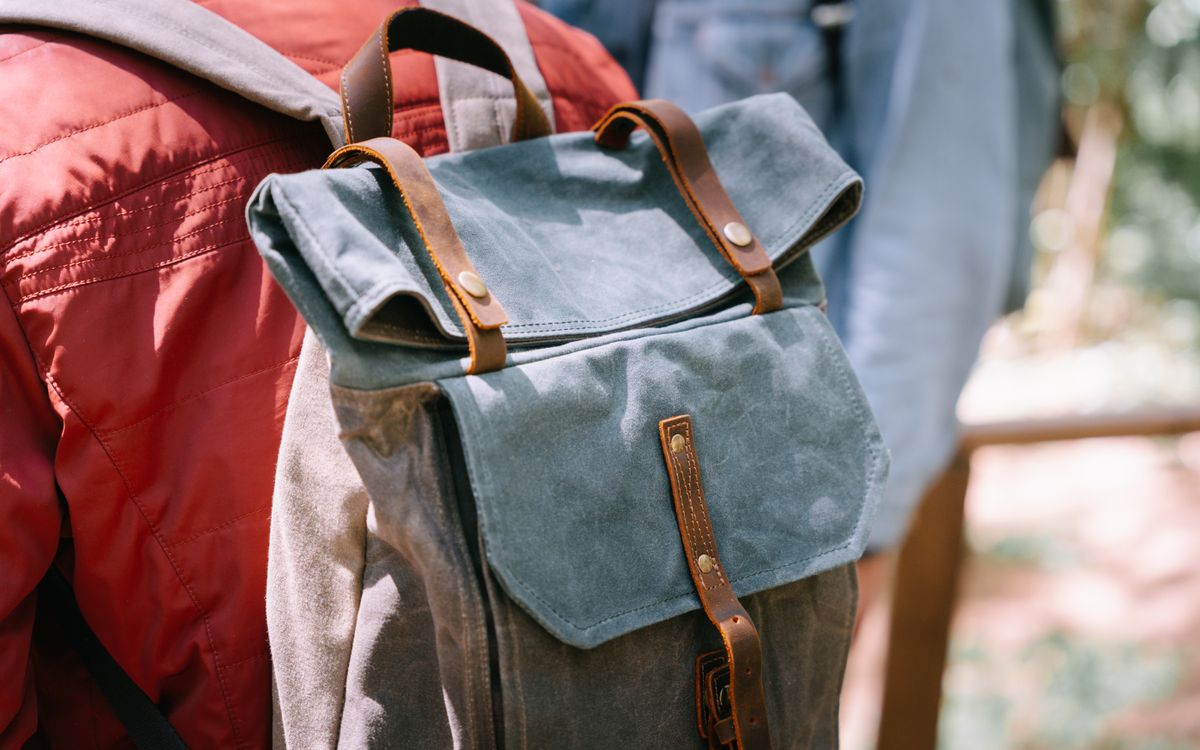
A backpack’s spec sheet is full of numbers that sound important and a few that actually are. For a daily carry, the difference between a good bag and an annoying one usually comes down to three things: volume, the laptop sleeve, and how the straps distribute weight.
Liters, translated
Backpack volume is measured in liters. For daily carry, 18–24 liters covers a laptop, a lunch, a layer, and a water bottle. Under 18 liters, a laptop plus a jacket becomes a puzzle; over 26, the bag reads as luggage and gets heavy on one shoulder.
For a weekend trip, 28–35 liters is the usual range. For a one-bag trip that has to hold clothes, a laptop, and shoes, 35–45 liters — but at that size, the carry system matters more than the fabric. A pack that’s the right volume but the wrong shape still fails: depth and height decide whether a cabin locker takes it, and a bag that’s an inch too deep gets gate-checked.
The laptop sleeve
A padded sleeve that’s suspended above the bag’s base is the difference between a protected laptop and a cracked corner. Check two things: the sleeve’s stated max laptop size, and whether the sleeve is raised off the bottom of the bag. A sleeve that touches the base transmits every drop.
Carry: straps and back panel
Shoulder straps should be curved and padded, with a width that spreads the load. A sternum strap keeps the bag from swinging when you cycle or run for a train. A padded back panel with a channel down the middle lets heat escape — the difference between a sweaty back and a comfortable one on a twenty-minute walk.
For loads over about 15 pounds, a hip belt starts to matter. On a commuter pack, it’s optional; on a travel pack, it’s the feature that makes the bag wearable for hours.
Organization that works
A good daily bag has a quick-access pocket for keys and a card, a main compartment that opens wide enough to see everything, and a separate compartment for a laptop. Bags with a single deep tube force you to unpack to find anything — the classic failure mode of minimalist designs.
How it reads in a scene
At level 1–2, a clean backpack is the most practical bag there is, and in most cities it reads as neutral rather than student. Choose a dark color, a structure that holds its shape when half-full, and hardware that doesn’t rattle. At level 3 and above, the backpack gives way to a briefcase or a tote — a backpack at a business dinner reads as a commute that didn’t end.
Buy for the load you carry daily, not the trip you take twice a year.
Frequently asked questions
- What size backpack do I need for a commute?
- Around 18 to 24 liters if you carry a laptop, a lunch, and a layer. Below 18 liters you'll struggle with a laptop plus a jacket; above 26 liters the bag starts to look like luggage and pulls at the shoulders when it's full.
- What does 'personal item' size mean?
- It's the underseat bag allowance on a flight, and it varies by airline — commonly around 18 by 14 by 8 inches, but some carriers are stricter. Check the specific airline's numbers before you buy; a bag that fits one carrier's personal item can fail another's by an inch.
- Do load lifters matter on a small pack?
- Less than on a hiking pack, but they help once the bag is over about 20 liters and fully loaded. On a small commuter pack, a padded back panel and a sternum strap do more for comfort than load lifters, which mostly matter for heavy loads.